Picnic Mat OEM Production Scalability Planning for United States Buyers
By Vincent Xi | Editorial Author
Direct answer: For a United States B2B buyer, picnic mat OEM production scalability planning is a quote-specific release decision, not a broad factory-capacity claim. Before bulk release, require the supplier to connect the approved picnic mat configuration to a dated capacity statement for the requested shipment window, material and packaging status, production route, inspection controls, label and packaging proofs, commercial terms, named United States destination, and ship-ready evidence.
The linked figures in this article are source-reported screening inputs only. They do not establish a selected supplier's current capacity, minimum-order commitment, compliance fit, landed cost, or delivery performance for an approved picnic mat configuration. Use them to frame RFQ questions, then obtain dated evidence from the quoted supplier.
Production Scalability Planning for United States Picnic Mat Manufacturing
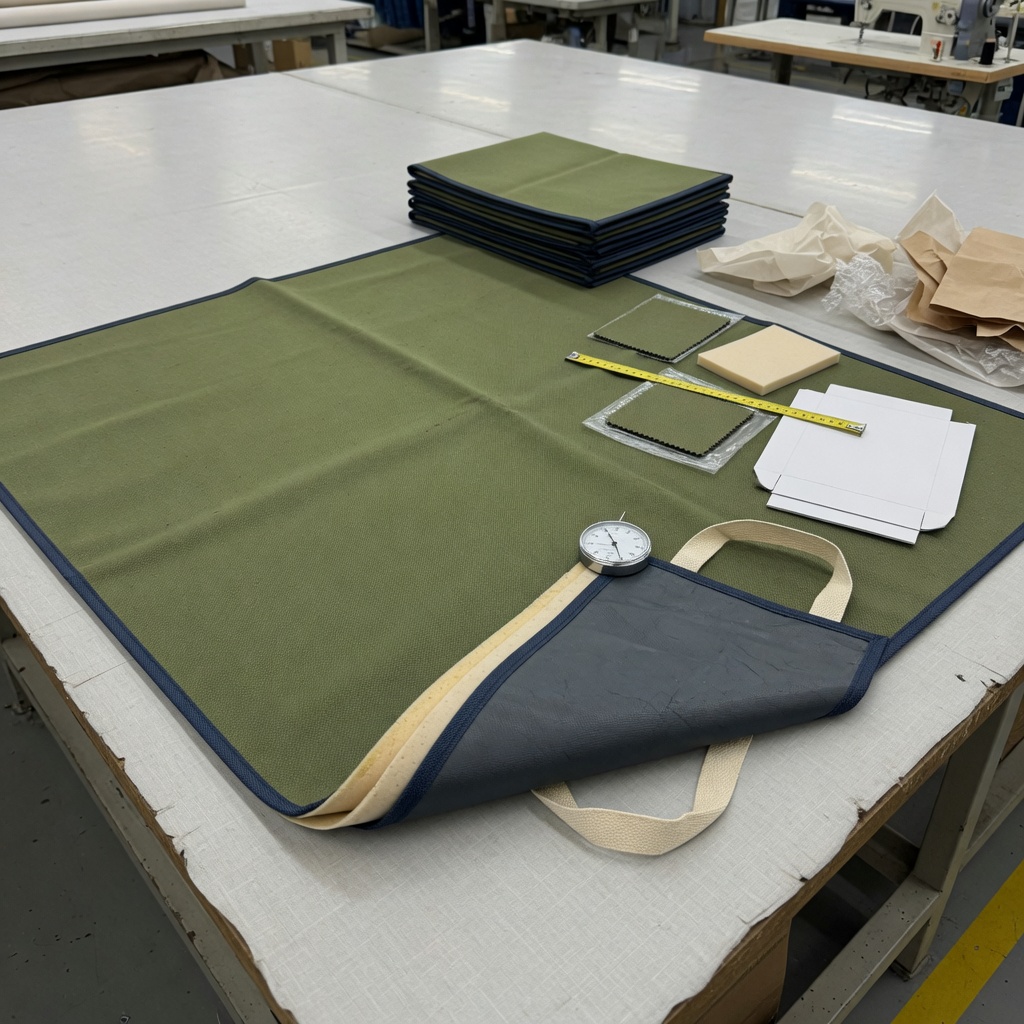
Start with a single controlled picnic mat configuration. The RFQ should identify the open, folded, and packed dimensions; tolerances and measurement method; material stack; edge finish; carry features; artwork; label placement; individual packaging; carton configuration; and acceptance criteria.
For the requested release window, require the supplier to document:
- Available capacity for the approved construction after committed load is considered.
- Material, trim, label, and packaging reservation status.
- The proposed route from material receipt through cutting, printing or surface treatment where applicable, assembly, inspection, folding, packing, and ship-ready preparation.
- Any outsourced operation that could affect capacity, quality, or delivery.
- The likely production constraint and the proposed response if a milestone changes.
- The buyer approval path for changes to materials, artwork, labels, packaging, cartons, process, or schedule.
Hold bulk release until the product sample, artwork proof, label proof, packaging proof, inspection plan, and schedule are approved in writing. A facility description, catalog listing, broad minimum-order statement, or generic lead-time claim does not demonstrate production scalability for the buyer's approved picnic mat and requested shipment window.
Practical RFQ Checklist for United States Picnic Mat Orders
Use the checklist as a controlled RFQ appendix. Each supplier response should identify the responsible party, issue date, validity period, applicable picnic mat configuration, supporting file, and any assumption or exclusion. A checked item without a dated response or referenced attachment should not be treated as release evidence.
- [ ] Buyer and destination: Name the purchasing entity, importer or consignee responsibility, delivery term, currency, and named United States destination.
- [ ] Controlled product specification: Attach the drawing or specification covering open, folded, and packed dimensions; tolerances; measurement method; material layers; edge construction; carry features; colors; artwork; and workmanship criteria.
- [ ] Order structure: State required units by approved configuration, color, artwork, and packaging variant. Separate the initial release from any forecast or potential repeat order.
- [ ] Minimum-order basis: Require the supplier to state whether its minimum applies by order, configuration, material, color, artwork, packaging type, or production run.
- [ ] Sample control: Identify sample construction, materials, print or surface-treatment route, packaging status, approval authority, revision status, and the conditions that would require another approval.
- [ ] Quote-specific capacity: Request available production capacity for the required shipment window after committed work is considered. Require the supplier to identify the expected constraint rather than provide only a facility-wide capacity claim.
- [ ] Material readiness: Obtain the reservation or procurement status for face material, cushioning layer, backing, binding, thread, straps, labels, individual packaging, and cartons.
- [ ] Production route: Require the sequence of internal and outsourced operations, the location and responsible party for each critical operation, and the planned control point before work moves forward.
- [ ] Scalability response: Ask how the proposed route changes if release volume changes, including additional lines, shifts, equipment, subcontracting, material lots, inspections, or split shipments. Any proposed change remains subject to written buyer approval.
- [ ] Label and packaging proof: Attach buyer-approved content, placement, attachment method, barcode treatment where applicable, individual-packaging details, carton configuration, carton marks, and pallet assumptions.
- [ ] Quality plan: Define inspection stages, sampling or inspection basis, measurement tools, defect classifications, acceptance criteria, reporting format, nonconforming-product control, and corrective-action responsibility.
- [ ] Document requirements: List each buyer-required test report, declaration, standard, or certification document with its required scope, holder, validity, and product or material applicability. Require current copies before relying on a claim.
- [ ] Landed-cost basis: Itemize product, packaging, origin handling, export documentation, freight, insurance, duty or tariff treatment, customs brokerage, terminal charges, inland delivery, pallet handling, inspection, and rework as included, excluded, or buyer-supplied.
- [ ] Delivery schedule: Provide dated milestones for material reservation, sample approval, bulk start, in-process inspection, packed-goods readiness, final inspection, booking, and ship-ready release.
- [ ] Change and delay control: Identify who must notify the buyer, the required evidence, the buyer's approval authority, and the recovery proposal for material, process, artwork, label, packaging, carton, quality, capacity, or schedule changes.
- [ ] Shipment release: Require final inspection evidence, carton checks, approved defect disposition, required commercial and shipment documents, and written release by the authorized buyer contact.
The completed checklist should remain tied to the approved specification and quote revision. Reopen affected approvals when the supplier proposes a different material, process, production location, outsourced operation, packaging setup, commercial basis, or delivery schedule.
Source-Reported Planning Inputs for Picnic Mat Manufacturing
These figures are retained as attributable screening context. They are not output-rate benchmarks, delivery commitments, or landed-cost inputs.
| Linked source | Source-reported figure | Scope and date context | RFQ verification required |
|---|---|---|---|
| GulTrek supplier guide | 300 to 1,000 units per custom OEM order; 5 to 10 calendar days for a sample; 20 to 35 calendar days for bulk production. | Scope: suppliers summarized by the guide. Date context: the page presents itself as a calendar-year 2026 guide; verify on the RFQ issue date. | Confirm whether each figure applies to the approved construction, color, print method, packaging, release quantity, and shipment window. |
| Sunwen Textile product page | 500 pieces per customized order; 100 pieces per stock order; 25 to 40 calendar days for production, stated to depend on print method. | Scope: the company's stated product-page offer. As-of context: undated source page; obtain a dated RFQ response. | Separate stock availability from a custom build. Request the proposed print method, material route, packaging work, and capacity schedule. |
| Accio supplier directory overview | 3,000 to 20,000 or more square meters of facility area; 50 to 300 or more employees; 15 to 45 calendar days after sample. | Scope: directory evaluation guidance, not an audit record for a selected supplier. As-of context: undated source page; obtain a dated RFQ response. | Request capacity for the quoted route and shipment window. Do not infer available output from site-wide area or employee figures. |
Do not average, extrapolate, or convert these figures into an assumed output rate, ship date, or landed-cost result. The release decision should rely on the selected supplier's dated response for the approved picnic mat configuration.
United States RFQ Controls for Picnic Mat Manufacturing
Label and packaging control: Provide buyer-approved label content, placement requirements, barcode treatment where applicable, individual-packaging requirements, carton configuration, carton marks, pallet assumptions, and warehouse-handling constraints. Require a supplier proof that identifies the proposed label material, attachment method, placement, packaging, and carton setup. The linked sources are not evidence of product-specific United States legal requirements, marketplace requirements, or certification status.
Landed-cost control: Require each supplier to quote against the same delivery term, named United States destination, currency, and quote-validity date. Ask for a clear inclusion and exclusion basis covering product price, packaging, origin handling, export documentation, freight, insurance, duty or tariff treatment, customs brokerage, terminal charges, inland delivery, pallet handling, inspection, and rework. Compare offers only after the commercial basis is aligned.
Delivery control: Define ship-ready status, booking responsibility, shipment-document requirements, change-notice timing, and the buyer contact authorized to approve a split shipment, revised schedule, substitute material, or rework plan. Request milestones for material reservation, sample approval, bulk start, inspection, packed-goods readiness, booking, and ship-ready release.
Document control: When the buyer requires a standard, test, or certification document, state the exact requirement, document scope, holder, validity, and applicable product or material coverage in the RFQ. A buyer requirement is separate from a supplier's stated practice, and no certification is implied by this article.
Production Scalability Planning Release Matrix
| Decision gate | Required evidence | Release condition |
|---|---|---|
| Controlled product definition | Approved drawing, bill of materials, artwork, labels, packaging details, and acceptance criteria | Do not compare offers with different construction or packaging assumptions as equivalent. |
| Scale readiness | Quote-specific capacity statement, committed-load disclosure, material status, outsourced-operation disclosure, and milestone schedule | Do not release against a broad capacity statement or a general lead-time claim. |
| Change control | Written procedure covering material, process, artwork, label, packaging, carton, and schedule changes | Do not permit a change without written buyer approval against the controlled specification. |
| Preproduction approval | Product sample, artwork proof, label proof, packaging proof, and inspection plan | Start bulk work only after the controlled artifacts are approved. |
| United States commercial basis | Delivery term, named destination, currency, quote-validity date, and cost inclusions and exclusions | Compare landed-cost offers only on an aligned commercial basis. |
| Shipment release | Inspection evidence, carton checks, defect disposition, corrective-action route, ship-ready definition, and release authority | Release shipment only after agreed evidence is complete. |
Methodology, Source Context, and Limitations
Methodology
The numeric entries are retained only as source-reported planning inputs from the supplied links. Each table entry identifies the source, unit, stated scope, and page-date or undated context. No figure is averaged, normalized, extrapolated, or used to calculate capacity, delivery timing, or landed cost. The remaining content defines RFQ evidence and release controls for United States B2B buyers; it does not assert performance by a source company or an unnamed supplier.
Source Context
GulTrek's supplier guide is used only for the figures attributed to its supplier summary. Sunwen Textile's product page is used only for the company's stated order and production information. Accio's supplier directory overview is used only as directory guidance and not as an audit record for a selected supplier.
Limitations and What to Verify
The linked pages do not validate a buyer's final specification, a selected supplier's current queue, label content, compliance status, quote price, freight inclusions, shipment timing, or document validity. Before purchase-order release, verify the dated quote, exact minimum-order basis, approved bill of materials, sample route, material reservation, available capacity, production milestones, label and packaging proofs, inspection plan, delivery-term inclusions, and shipment responsibility for the approved picnic mat configuration and requested release window.
Discuss Your Requirements
Review our manufacturing capabilities, then share your specifications for a supplier-fit review.