Picnic Blanket Wholesale Supplier Minimum Order Quantity for United States Buyers
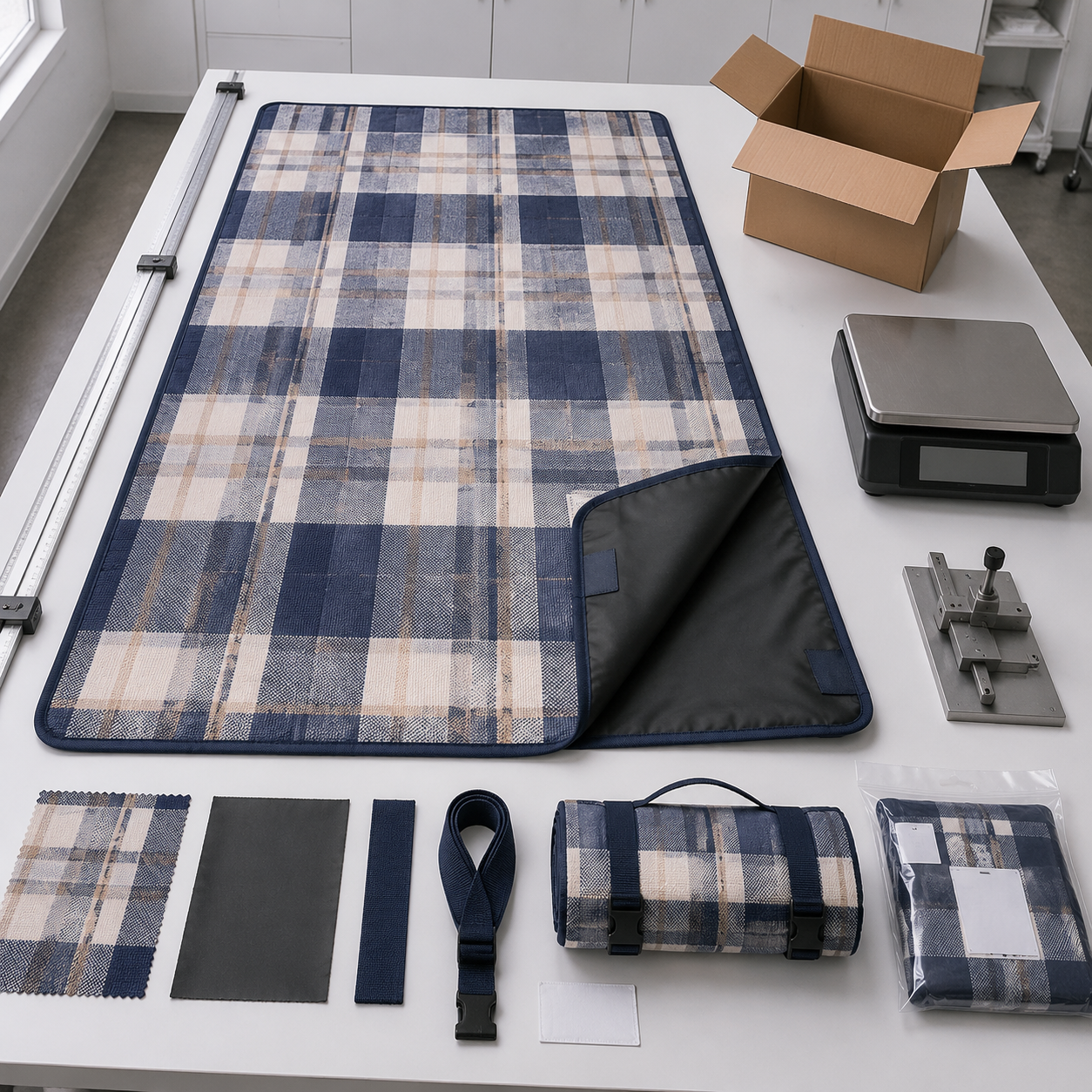
By Vincent Xi, Editorial Author
For a United States buyer evaluating a picnic blanket wholesale supplier minimum order quantity, the supplied sources establish neither a universal industry MOQ nor a current FIELDLOOM MOQ. The usable answer must come from a dated supplier quotation that defines the minimum in finished picnic blankets per sellable SKU, the total purchase-order minimum, and any material, color, print, trim, label, or packaging minimum that could increase the commitment.
Direct answer: Do not approve a headline quantity by itself. Approve an MOQ only when it is tied to a fixed product specification, permitted SKU splits, quantity-variance terms, labeling and packaging requirements, price basis, inspection controls, and a dated United States delivery plan.
Working definition: Effective MOQ means the smallest order configuration that satisfies every written finished-product and component minimum for the selected specification, artwork, packaging format, and delivery basis. This is an RFQ control used in this article, not a claim that every supplier defines MOQ the same way.
Author evidence note: The linked profile identifies Vincent Xi as FIELDLOOM's Editorial Author. This article does not claim first-hand factory, testing, certification, sourcing-performance, or customer experience.
United States Minimum Order Quantity Approval Gate
A supplier's MOQ response should support an approval decision rather than provide an isolated quantity.
| Decision | Required evidence |
|---|---|
| Approve | The dated quote defines finished units per sellable SKU, total-order minimum, component minimums, SKU-split rules, quantity variance, specification revision, packaging basis, applicable Incoterms rule and named place, inspection gate, and United States delivery milestones. |
| Clarify | A quantity is stated, but a related material, color, print, trim, label, packaging, price, inspection, or schedule condition remains undefined. |
| Reject | The supplier will not provide a written quantity basis, cannot connect the MOQ to an identifiable specification and sample, or reserves an unrestricted right to substitute construction or components. |
Require the MOQ matrix to answer:
- Is the minimum stated per sellable SKU, across the complete purchase order, or on both bases?
- Which changes in dimensions, face material, backing, colorway, print, binding, carry method, label, or retail pack create a separate minimum?
- Does a fabric, coating, lamination, dye lot, print, trim, label, or packaging run exceed the finished-product minimum?
- Which variants may share components or a production run, and what allocation applies to each variant?
- When quantity variance is allowed, is the invoice based on ordered, produced, shipped, or accepted units?
- How are excess custom materials, labels, trims, and packaging charged, stored, returned, reused, or destroyed?
- Is a repeat-order MOQ conditional on material availability, retained tooling, or remaining packaging stock?
- Through what date are the quantity, specification, price, and delivery terms valid?
The Tanger's Furniture wholesale blanket page discusses commercial variables including minimums, case packs, freight, and replacement cycles. That supplier-authored category context supports asking about those variables. It does not establish a picnic blanket MOQ, a transaction-specific quotation, or a FIELDLOOM operating practice.
Tie Each Minimum Order Quantity to a Fixed Picnic Blanket Specification
Every quantity and price tier should reference the same dated specification revision. If construction, packaging, or service scope changes between tiers, the buyer is not comparing MOQ alone.
| Specification field | Required supplier response |
|---|---|
| Finished dimensions | Length and width in stated units, measurement condition, test locations, and plus-or-minus tolerance. |
| Face material | Generic fiber composition, construction, color or print method, reporting basis for fabric mass, and material-run minimum. |
| Backing | Material description, coverage, attachment or bonding method, reporting basis, and separate component minimum. |
| Finished-product mass | Mass per complete picnic blanket in stated units, measurement condition, and tolerance. |
| Edges and seams | Binding material and width, seam construction, stitch-density reporting unit, reinforcement locations, and workmanship criteria. |
| Carry method | Strap, handle, fastener, or bag construction; dimensions; attachment points; and trim or color minimums. |
| Decoration | Artwork revision, placement dimensions, approval method, setup charge, and minimum per artwork or colorway. |
| Unit packaging | Folded or rolled dimensions, packaging components, assortment rules, inserts, and component minimums. |
| Master carton | Units per carton, assortment, dimensions, gross mass, closure method, and shipping-mark approval process. |
| Sample control | Sample type, specification revision, approval date, retained reference, and change process after approval. |
The Blue Phoenix wholesale blanket sourcing page recommends obtaining technical data and identifies composition, fabric weight, and edge finish as sourcing controls. These are useful supplier-authored RFQ prompts, not independent verification of another supplier's product, capacity, workmanship, test results, or certification status.
The quotation, specification, approved sample record, artwork, packaging file, inspection brief, and purchase order should use the same revision identifier. A physical sample cannot control bulk production unless the contract identifies the approved sample and defines how deviations will be handled.
United States Labeling Minimum Order Quantity Controls
Custom sewn labels, inserts, and retail packaging can have component minimums different from the finished-product MOQ. Obtain proposed artwork before quantity approval and require the supplier to disclose the order basis, setup charge, unit charge, excess quantity, storage terms, and disposal terms for each custom component.
The Federal Trade Commission's textile and wool labeling guidance describes federal fiber-content, country-of-origin, and responsible-business identity disclosures for covered textile and wool products. U.S. Customs and Border Protection publishes separate country-of-origin marking guidance for imported articles. These sources identify review areas within their respective scopes; neither approves a particular picnic blanket, label file, placement, or import transaction.
Before components are ordered, qualified United States compliance counsel and the buyer's customs broker should determine product coverage, exemptions, wording, placement, permanence, responsible-party identification, and origin treatment for the quoted item. Proposed artwork is not proof of compliance.
The MOQ record should confirm that:
- Label and packaging quantities appear beside finished-unit minimums in the MOQ matrix.
- Fiber, origin, and responsible-business information is supported by transaction-specific documentation.
- Artwork setup and excess-component exposure are separated from the finished-unit price.
- The buyer can approve the production artwork revision before custom components are ordered.
- Unused custom components are quantified and governed by written storage, return, reuse, or destruction terms.
- A change in material, origin, manufacturing location, or responsible party triggers label review and written approval.
Do not treat a logo, marketing statement, standard reference, or unmatched report as certification evidence. When a standard or test method is legally applicable or contractually selected, identify its title, edition, scope, acceptance criterion, sample identity, issuer, and document date. Keep the external requirement separate from the supplier's internal practice, and do not imply certification without a current document covering the quoted product and production scope.
Compare Landed Cost at Each Minimum Order Quantity
MOQ analysis should compare total commitment and expected sellable units, not just the quoted unit price. Hold the specification, currency, packaging basis, delivery mode, Incoterms rule, named place, and cost boundary constant across tiers.
The International Chamber of Commerce Incoterms rules allocate specified delivery tasks, costs, and risks when an applicable rule is incorporated into the contract. The selected rule does not establish MOQ, title transfer, tariff classification, duty treatment, or complete landed cost.
For each MOQ tier, separate:
- Finished-goods value.
- Tooling, artwork, sampling, testing, and inspection paid by the buyer.
- Custom label and packaging setup or excess-component exposure.
- Export handling, international freight, and cargo insurance paid by the buyer.
- Duty, customs fees, brokerage, terminal charges, storage, and domestic delivery.
- Buyer-approved allowances for rejected, short-shipped, replacement, or otherwise nonsellable units.
Review proposed classification and origin treatment against the United States Harmonized Tariff Schedule on the quotation-review date with a qualified customs broker. The tariff resource supports classification research; it does not validate a supplier's proposed code, origin statement, or duty calculation.
Illustrative MOQ Comparison: Assumptions to Verify
Every value below is a buyer-created example assumption or calculation for one sellable SKU. The figures are not supplier terms, FIELDLOOM specifications, current market benchmarks, or demand forecasts. Verify every input in a dated supplier quote, approved specification, freight record, customs review, and buyer demand plan before approval.
| Example input or result | Illustrative value | Basis |
|---|---|---|
| Lower-tier minimum | 600 finished picnic blankets per sellable SKU | Example assumption to verify in the supplier quote. |
| Lower-tier unit price | US$8.40 per finished picnic blanket | Example EXW assumption at the supplier's named place; verify in the supplier quote. |
| Lower-tier product value | US$5,040 per sellable SKU | Example calculation: 600 assumed finished units multiplied by the assumed US$8.40 finished-unit price. |
| Higher-tier minimum | 1,200 finished picnic blankets per sellable SKU | Example assumption for the same specification; verify in the supplier quote. |
| Higher-tier unit price | US$7.70 per finished picnic blanket | Example EXW assumption at the same named place and scope; verify in the supplier quote. |
| Higher-tier product value | US$9,240 per sellable SKU | Example calculation: 1,200 assumed finished units multiplied by the assumed US$7.70 finished-unit price. |
| Unit-price difference | US$0.70 per finished picnic blanket | Example calculation comparing only the assumed finished-unit prices. |
| Incremental product-value commitment | US$4,200 per sellable SKU | Example calculation: assumed US$9,240 higher-tier value minus assumed US$5,040 lower-tier value. |
| Monthly demand | 100 sellable picnic blankets per sellable SKU per month | Example buyer forecast assumption to verify against the approved demand plan. |
| Lower-tier inventory cover | 6 months per sellable SKU | Example calculation: 600 assumed units divided by 100 assumed sellable units per month. |
| Higher-tier inventory cover | 12 months per sellable SKU | Example calculation: 1,200 assumed units divided by 100 assumed sellable units per month. |
| Finished-size placeholder | 60 inches long by 80 inches wide per finished picnic blanket | Example RFQ assumption to verify with a supplier tolerance and measurement method. |
| Combined-layer areal-mass placeholder | 300 grams per square metre across the complete picnic blanket area | Example RFQ assumption to verify with a reporting method, tolerance, approved sample, and inspection record. |
Use verified inputs in these calculations:
- Product-value commitment = finished-unit MOQ multiplied by quoted finished-unit price.
- Inventory cover = finished-unit MOQ divided by approved monthly demand for sellable units.
- Landed cost per expected sellable picnic blanket = all included order-level costs divided by expected sellable units.
- Incremental tier commitment = higher-tier total commitment minus lower-tier total commitment.
Keep nonrecurring charges separate so initial-order and repeat-order economics remain visible. A lower unit price does not justify a higher MOQ until inventory, storage, financing, markdown, obsolescence, and specification-change exposure fall within the buyer's approved limits.
Delivery Evidence for Each Minimum Order Quantity Tier
A lead-time duration without a defined start event is not a complete delivery commitment. Require each tier to state:
- The production-timing trigger, such as cleared deposit, material approval, artwork approval, or preproduction-sample approval.
- Buyer and supplier dependencies that can move the schedule.
- Material-ready, production-complete, inspection-ready, cargo-handoff, and requested United States delivery dates.
- Shipping mode, loading basis, named handoff place, and responsibility for booking and export documents.
- Whether split shipments are permitted and how they affect price, inspection, freight, invoicing, and acceptance.
- How inspection failure, rework, replacement, or quantity shortage changes the committed dates.
- Whether a higher MOQ changes the production window, carton count, shipment plan, or freight basis.
Do not compare a lower-MOQ expedited shipment with a higher-MOQ standard shipment as though quantity were the only variable. Request a comparable delivery scenario for each tier or show the mode difference as a separate sensitivity calculation.
Practical Minimum Order Quantity RFQ Checklist
Attach this practical RFQ checklist to the inquiry and require a written supplier response or referenced document for every item. A yes-or-no answer is insufficient when the control requires a quantity, date, tolerance, cost, named place, artwork revision, or document identifier.
Supplier and Quote Controls
- [ ] Record the supplier's legal entity, business address, quotation issuer, manufacturing location, production role, and purchase-order contracting party.
- [ ] State the quotation issue date, expiration date, currency, payment terms, and specification revision.
- [ ] Identify every sellable SKU, including dimensions, construction, colorway, print, binding, carry method, label configuration, and retail pack.
- [ ] Confirm that each price tier uses the same product specification, inspection scope, packaging basis, and delivery scenario.
MOQ and Product Controls
- [ ] State the minimum finished picnic blankets per sellable SKU and the minimum for the complete purchase order.
- [ ] List separate fabric, coating, lamination, dye lot, print, binding, trim, strap, label, insert, retail-pack, and carton minimums.
- [ ] Show permitted SKU splits and the allocation required for every variant sharing a material or production run.
- [ ] Define allowed overrun or underrun, the invoice basis, buyer acceptance rights, and the remedy for a shortage.
- [ ] Disclose setup charges, excess custom-component quantities, and written terms for storage, reuse, return, or destruction.
- [ ] Provide the repeat-order MOQ and identify any dependency on retained tooling, available material, or unused packaging stock.
- [ ] Supply a dated specification with measurement methods and tolerances for finished dimensions, complete-product mass, materials, backing, binding, seams, carry components, decoration, and folded packing.
- [ ] Identify the approved sample type, sample revision, approval record, retained reference, and process for controlling bulk-production changes.
United States Labeling, Inspection, and Cost Controls
- [ ] Provide proposed label and packaging artwork before ordering custom components.
- [ ] Provide transaction-specific support for fiber content, country of origin, responsible-business identity, and manufacturing location for qualified review.
- [ ] Identify each applicable legal requirement or contractually selected standard by title, edition, scope, acceptance criterion, and document date without presenting an unmatched report as certification.
- [ ] Define the production lot, inspection stage, measurement points, defect classes, sampling method, acceptance criteria, report format, and failure remedy.
- [ ] State the selected Incoterms rule, named place, version incorporated into the contract, and all price inclusions and exclusions.
- [ ] Provide unit-pack and master-carton quantities, dimensions, gross mass, assortment, closure method, and shipping-mark approval process.
- [ ] Separate product value, tooling, sampling, testing, inspection, packaging setup, freight, insurance, customs, brokerage, terminal, storage, and domestic-delivery inputs.
- [ ] Provide proposed tariff classification and origin documentation for review by the buyer's qualified customs broker; do not treat the proposal as a customs determination.
Delivery and Purchase-Order Controls
- [ ] Define the production lead-time start event and every buyer or supplier dependency that can move it.
- [ ] State material-ready, production-complete, inspection-ready, cargo-handoff, and requested United States delivery dates for each MOQ tier.
- [ ] State whether split shipments are permitted and how they affect price, inspection, freight, invoicing, and acceptance.
- [ ] Define how inspection failure, rework, replacement, shortage, or late buyer approval changes the schedule.
- [ ] Prohibit unapproved material, construction, color, artwork, packaging, manufacturing-location, or subcontracting changes in the purchase order.
- [ ] Require written approval for substitutions and define cancellation, replacement, rework, refund, and late-delivery remedies.
- [ ] Confirm that the accepted quote, specification, sample record, artwork, packaging file, inspection brief, and purchase order use matching revisions.
Treat every unchecked item as an open RFQ issue. Issue the purchase order only after the effective MOQ, total financial commitment, expected sellable quantity, United States labeling review, inspection gate, and dated delivery plan have documented buyer approval.
Evidence and Calculation Method
The source review separated author evidence, commercial sourcing context, official guidance, contract rules, and buyer-created calculations:
- The Vincent Xi author profile was used only for the author's name, role, and profile URL.
- The Tanger's Furniture and Blue Phoenix pages were used as supplier- or retailer-authored prompts for commercial and specification questions, not as independent audits.
- The Olive Home picnic blanket supplier page was used only as supplier-authored picnic blanket category context. It does not establish a transaction-specific MOQ, current price, delivery promise, test result, or verified capability for a pending order.
- The FTC and CBP resources were used only to identify federal labeling and import-marking review areas within their stated scopes.
- The ICC resource was used for delivery-task, cost, and risk-allocation context. The United States tariff resource was used for classification research context subject to broker review.
The method was to extract only controls supported by each source's identifiable scope, then classify statements as source context, buyer decision rules, example assumptions, or calculations. Commercial pages were not treated as evidence for another supplier's product or performance. Official resources were not treated as transaction approvals.
The example product-value results were derived by multiplying assumed finished units by assumed finished-unit prices. Inventory-cover results were derived by dividing assumed finished units by assumed monthly sellable demand. No supplied source establishes those example inputs.
Limitations and What to Verify
The supplied source set does not establish a universal picnic blanket MOQ or a current FIELDLOOM quantity, price, specification, capacity, certification, test result, landed cost, or delivery commitment. Commercial terms can change with the sellable SKU, materials, colors, component requirements, packaging, quotation date, delivery basis, and requested destination date.
Before approval, verify the supplier's legal identity and manufacturing role; SKU-level and total-order minimums; material, color, print, trim, label, and packaging minimums; split and quantity-variance rules; bill of materials; measurable tolerances; sample-to-production controls; applicable United States labeling and marking requirements; classification and origin treatment; landed cost per expected sellable picnic blanket; inspection criteria; payment terms; change controls; and dated delivery milestones.
Recheck official guidance and commercial terms on the quotation-review date. A web page is not a substitute for a signed quotation, approved specification and sample, transaction-matched document, inspection record, customs review, or enforceable purchase order.
Discuss Your Requirements
Review our manufacturing capabilities, then share your specifications for a supplier-fit review.