Beach Mat Sourcing: Sustainability Sourcing Criteria for United Arab Emirates Procurement
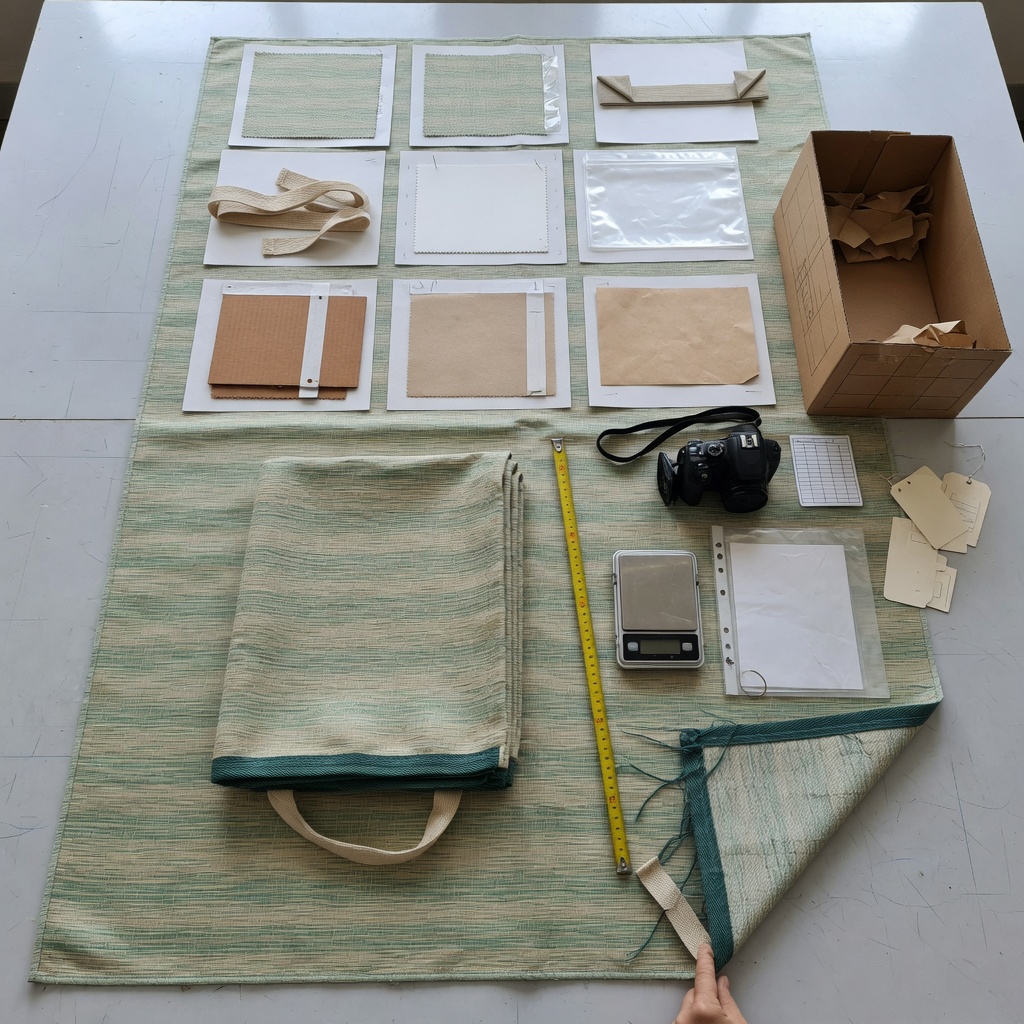
By Vincent Xi, Editorial Author.
For United Arab Emirates procurement teams, beach mat sourcing should begin with a sustainability evidence gate before prices are ranked. Each supplier should connect proposed wording to the quoted SKU, covered component, supporting document, approved sample, production lot, and shipment record. Evidence for face fabric alone supports only a face-fabric statement unless the documentation also covers a broader claim. These are buyer-defined RFQ controls; they do not establish that any supplier or beach mat is certified.
The supplied sources provide limited sourcing context. The cited LisoHome guide discusses intended use, fabric, backing, sand-release surface, size, folded packing, MOQ, and documentation associated with a recycled-polyester option. The cited DataIntelo page discusses recycled PET or rPET fabric in the sand-free beach-mat category. The cited Accio directory raises raw-material identification, traceability, and finished-product inspection as supplier-screening topics. None verifies a quoted SKU, supplier capability, material lot, shipment, certificate, or United Arab Emirates import requirement.
The procurement decision is therefore specific: compare commercial offers only after they pass the same claim-scope, evidence, sample, traceability, QC, packing, and delivery-basis checks.
Practical RFQ Checklist for United Arab Emirates Beach Mat Procurement
Attach this buyer-defined checklist to the RFQ response schedule. Require the supplier to complete every item, provide a referenced attachment where requested, and mark an item not applicable with a reason rather than leaving it blank. An unchecked or unsupported item should place the offer on hold until it is clarified.
Buyer issue fields
- [ ] Record the buyer SKU, specification revision, intended use, finished format, requested quantity, destination, and required delivery handoff.
- [ ] List each required component, including face fabric, backing, edge binding, carry component, labels, unit packaging, and export packaging.
- [ ] State the exact sustainability wording under consideration and whether it is intended to cover a material, component, package, process, or finished beach mat.
- [ ] Define the required sample stage, sample identifier format, approval authority, dimensions, tolerances, construction checks, and deviation process.
- [ ] Separate sustainability evidence requirements from functional QC requirements such as dimensions, stitching, backing, folding, or sand-release performance.
- [ ] Specify the quotation currency, quantity basis, delivery term, named handoff point, quote validity fields, required packing data, charges, and exclusions.
Supplier return fields
- [ ] Return the legal supplier identity, manufacturing origin, quoted SKU, construction, material references, component schedule, and every proposed deviation.
- [ ] Provide the exact proposed claim wording, covered and excluded components, composition or calculation basis where relevant, and evidence-to-SKU map.
- [ ] For each evidence document, identify the issuer, holder, document identifier, issue date, expiry date where applicable, relevant scope pages, covered facility or material, and connection to the quoted SKU.
- [ ] Submit a labeled sample with its revision, construction details, component references, measured dimensions, folded format, claim map, and deviation record.
- [ ] Describe any proposed functional inspection or test method, conditions, sample identity, acceptance basis, results format, and record-retention method.
- [ ] Explain how incoming materials will connect to the production lot, finished SKU, inspection record, packed quantity, and shipment reference.
- [ ] Return the proposed carton quantity, folded orientation, carton dimensions, net weight, gross weight, packing-trial status, and all freight-data assumptions.
- [ ] Confirm that changes to materials, components, facility, construction, evidence, artwork, or packing require written disclosure and buyer approval.
Buyer award and release checks
- [ ] Confirm that claim wording does not exceed the documented scope and that evidence for one component has not been extended to the finished mat.
- [ ] Confirm that the quotation, approved sample, evidence file, packing trial, and inspection plan all identify the same SKU and revision.
- [ ] Have the responsible local reviewer verify current United Arab Emirates classification, documentation, labeling, and import requirements for the final composition and shipment.
- [ ] Compare landed cost only after suppliers have quoted the same evidence-qualified construction, quantity, pack-out, delivery basis, and handoff point.
- [ ] Hold purchase-order or shipment release until deviations, change requests, nonconformities, artwork, inspection results, packing records, and shipment references are resolved and consistent.
United Arab Emirates Sustainability Sourcing Criteria for Beach Mat RFQs
Use a pass-or-hold schedule in the RFQ. The controls below translate the limited source context into buyer requirements; they are not descriptions of any supplier's current practice.
| Decision gate | RFQ instruction | Supplier return | Hold the offer when |
|---|---|---|---|
| Quoted SKU and construction | Identify the buyer SKU, specification revision, intended use, finished format, component schedule, and required functions | Signed specification acknowledgment, proposed construction, material references, sample reference, and all deviations | The quote describes only a generic mat or material rather than the finished beach mat SKU |
| Sustainability claim boundary | State the exact proposed wording and whether it covers a material, component, packaging item, process, or finished mat | Covered scope, exclusions, composition or calculation basis where relevant, and evidence references | Finished-product wording relies on evidence for only one fabric or component |
| Evidence fit | Require the issuer, holder, identifier, issue date, expiry date if applicable, scope pages, and link to the quoted SKU | Complete document set with the relevant material, product, facility, process, or transaction scope identified | A document is incomplete, outside its validity period where one applies, held by an unrelated entity, outside scope, or unconnected to the offer |
| Approved sample | Define the sample stage, identifier, revision, approval authority, and deviation procedure | Labeled sample, construction details, component references, dimensions, folded format, and deviation record | The sample and evidence package represent different materials, constructions, or revisions |
| Function and QC separation | Define any required finished-product function, method, conditions, acceptance basis, and report format separately from the sustainability claim | Proposed inspection method, sample identity, conditions, results, and SKU-linked records | A material document is presented as proof of sand release, backing performance, durability, or another finished-product function |
| Lot traceability | Require a documented connection among incoming materials, production lot, finished SKU, inspection record, and shipment | Lot map, material records, quantity status, inspection report, defect record, and SKU-linked images | The claimed input cannot be followed into the inspected and shipped SKU |
| Packing and commercial baseline | Fix the required quantity, packing fields, currency, delivery term, named handoff point, quote validity, charges, and exclusions | Carton quantity, dimensions, net weight, gross weight, packing-trial status, and dated quotation | Suppliers have priced different constructions, claim scopes, pack-outs, quantities, or delivery handoffs |
| Artwork and change control | Require buyer approval for claim wording and for changes to materials, components, facility, construction, documents, or packing | Final artwork proof, claim-to-evidence map, and written change request where applicable | Artwork exceeds the evidence scope or production differs from the approved specification |
Component-Level Sustainability Claim Schedule
Require a declaration for every component, including an explicit not-applicable response where appropriate. Blank fields should trigger clarification rather than an assumed pass.
| Component or item | Supplier declaration | Evidence boundary to check |
|---|---|---|
| Face fabric | Material description, declared composition basis, supplier item reference, color reference, and exact proposed claim | Evidence must identify the covered material and connect it to the quoted SKU, approved sample, production lot, and shipment |
| Backing, edge binding, and carry component | Separate material and construction declarations for each item present, including claim status | Evidence for one component must not be extended to another component without matching scope |
| Labels and unit packaging | Material declarations, proposed wording, artwork status, and any material or disposal statements | Packaging claims require packaging-specific support; product evidence cannot be reused unless its scope matches |
| Export packaging | Carton and protective-material descriptions, pack-out, measured dimensions and weights, and claim status | Packing-trial records and claim-specific support must correspond to the final pack configuration |
| Finished beach mat | Exact finished-product wording, included and excluded components, and calculation basis where relevant | The evidence must cover every element included in the claim and remain linked to the SKU, sample, lot, and shipment |
A recycled-content or related sustainability statement should remain no broader than its supporting evidence. Require the supplier to disclose the exact wording, covered component, excluded components, composition basis, document details, and SKU linkage before artwork approval.
No specific standard is named because the supplied sources do not establish which standard, if any, is relevant to a quoted SKU or proposed claim. If the buyer's responsible reviewer identifies a relevant standard, the RFQ should separate that standard's actual requirements from the supplier's own procedures. Naming a standard does not prove conformance, and certification should not be claimed without a current document whose holder, validity, facility, material or product scope, and claim scope match the offer.
Measurable RFQ Assumptions to Verify
The values below are buyer-created examples, not sourced specifications or market norms. Each applies only to the proposed SKU in the current RFQ as of that RFQ's issue date. The supplier must verify every value in its quotation and, where applicable, through the approved sample or packing trial before purchase-order release.
| Example data point | Unit, scope, date context, and source status | Required verification |
|---|---|---|
| 180 cm finished length and 90 cm finished width | Unit: centimeters. Scope: flat body dimensions for the proposed beach mat SKU. Date context: as of the current RFQ issue date. Source status: buyer-created example assumption; no supplied source establishes either dimension. | Return measured finished dimensions, proposed tolerances, measurement method, and any deviation in the quote and sample record. |
| 50 finished mats per export carton | Unit: finished mats per export carton. Scope: proposed pack-out for the current SKU. Date context: as of the current RFQ issue date. Source status: buyer-created example assumption; no supplied source establishes this quantity. | Verify through a packing trial and return the folded orientation, carton dimensions, net weight, and gross weight. |
| 14 kg maximum gross weight per export carton | Unit: kilograms per export carton. Scope: proposed gross-weight ceiling for the current SKU and pack-out. Date context: as of the current RFQ issue date. Source status: buyer-created example assumption; no supplied source establishes this limit. | Return the measured packed-carton gross weight and identify any deviation before freight comparison. |
| 0.28 kg gross carton-weight allocation per packed mat | Unit: kilograms per packed mat. Scope: internal consistency check for the current packing assumption. Date context: as of the current RFQ issue date. Source status: buyer-created example calculation derived from 14 kg per carton divided by 50 mats per carton; no supplied source establishes the result. | Replace the calculated value with supplier-validated packing data before landed-cost approval. |
Sustainability Evidence, QC, and Packing Release
The release file should show that the evidence, approved sample, inspected goods, and shipment all refer to the same SKU and revision.
| Release record | Required content | Decision controlled |
|---|---|---|
| Claim-to-SKU file | Final bill of materials, exact claim wording, covered and excluded components, evidence references, and SKU linkage | Prevents a limited material claim from becoming an unsupported finished-product claim |
| Approved-sample record | SKU, revision, sample identifier, component schedule, dimensions, folded format, claim map, approval status, and deviations | Establishes the physical reference against which bulk goods are reviewed |
| Bulk traceability and inspection record | Incoming material identity, production-lot map, finished quantity, buyer-defined acceptance criteria, results, nonconformities, and corrective action | Tests whether the claimed input and approved construction are represented in the inspected goods |
| Packing-trial record | Folded orientation, unit pack, carton configuration, measured dimensions, net weight, gross weight, and images | Replaces estimated freight inputs with SKU-specific packing data |
| Shipment-release file | Final claim evidence, artwork approval, inspection report, packing record, change status, quantities, and shipment references | Checks consistency across the purchase order, product, claims, packing, and shipping records |
United Arab Emirates Documentation and Landed-Cost Checks
The supplied evidence does not establish a United Arab Emirates customs classification, duty or tax rate, mandatory label wording, required import-document list, climate-performance requirement, or delivery lead time for beach mats. The designated importer, freight adviser, or compliance reviewer should verify current requirements using the final composition, manufacturing origin, shipment structure, value, destination, and shipping date.
| Release input | Supplier submission | Buyer-side verification |
|---|---|---|
| Product and origin data | Final component schedule, declared compositions, manufacturing origin, supplier identity, and requested supporting records | Confirm which current classification and import documents apply to the finished SKU |
| Quote and delivery basis | Currency, unit price, quantity basis, delivery term, named handoff point, validity, charges, timing assumptions, and exclusions | Normalize only evidence-qualified offers to the same SKU, quantity, packing basis, and handoff point |
| Freight data | Validated carton quantity, carton dimensions, net weight, gross weight, dispatch point, and pack configuration | Obtain a current freight quotation for the specified United Arab Emirates destination |
| Labels and artwork | Proposed product, unit-pack, and carton artwork with exact claim wording | Have the responsible local reviewer determine applicable information and approve artwork before production |
| Shipment documents | Buyer-requested document set, final bill of materials, claim evidence, sample approval, inspection report, packing record, and change status | Confirm that SKU, composition, wording, quantities, packing, and shipment references remain consistent |
For commercial comparison, use a buyer-defined formula only after the evidence and packing gates pass:
Normalized landed cost per accepted mat = (goods cost + packing charges + allocated freight and insurance + verified import and clearance charges + inland delivery + buyer-defined inspection or remediation allowances) / accepted quantity
This is a comparison template, not a statement of United Arab Emirates rates, required charges, or statutory calculation methods. Current inputs should come from the buyer's responsible advisers and shipment-specific quotations.
Methodology and Limitations
The methodology is qualitative. Explicit sourcing topics from the supplied pages were converted into RFQ fields, supplier-return requirements, hold conditions, checklist items, and release records. Each statement was treated as source context, a buyer-defined control, an example assumption, or an item requiring current verification. The example dimensions and packing values were created only to demonstrate how unit, scope, date context, source status, and supplier verification should appear in an RFQ; they are not benchmarks.
The source boundaries are deliberate. LisoHome supports the listed selection and documentation prompts but does not verify a supplier, product, functional result, environmental benefit, or shipment. DataIntelo provides context for recycled PET or rPET terminology but does not establish recycled content, certification, performance, traceability, or conformity for a quoted SKU. Accio provides supplier-screening context but does not prove that a listed supplier currently follows a process, holds valid evidence, has available capacity, or can deliver conforming goods.
Before purchase-order or shipment release, verify the complete bill of materials, composition basis, claim scope, document authenticity and validity, holder and facility scope, SKU linkage, approved-sample conformity, inspection method, acceptance criteria, production-lot traceability, packing quantity and measured weights, MOQ, price, production timing, delivery basis, landed cost, and current United Arab Emirates import, documentation, and labeling requirements. The cited pages cannot replace a current supplier quotation, claim-specific evidence, approved sample, buyer-side compliance review, validated packing trial, or shipment-specific inspection record.
Experience basis: The approved Vincent Xi author profile identifies Vincent Xi as Editorial Author. It does not support a first-hand product test, factory visit, certification audit, customer outcome, or personal sourcing story, and none is claimed here.
Discuss Your Requirements
Review our manufacturing capabilities, then share your specifications for a supplier-fit review.