Beach Mat OEM Warranty and Returns Policy for Malaysia Manufacturing Buyers
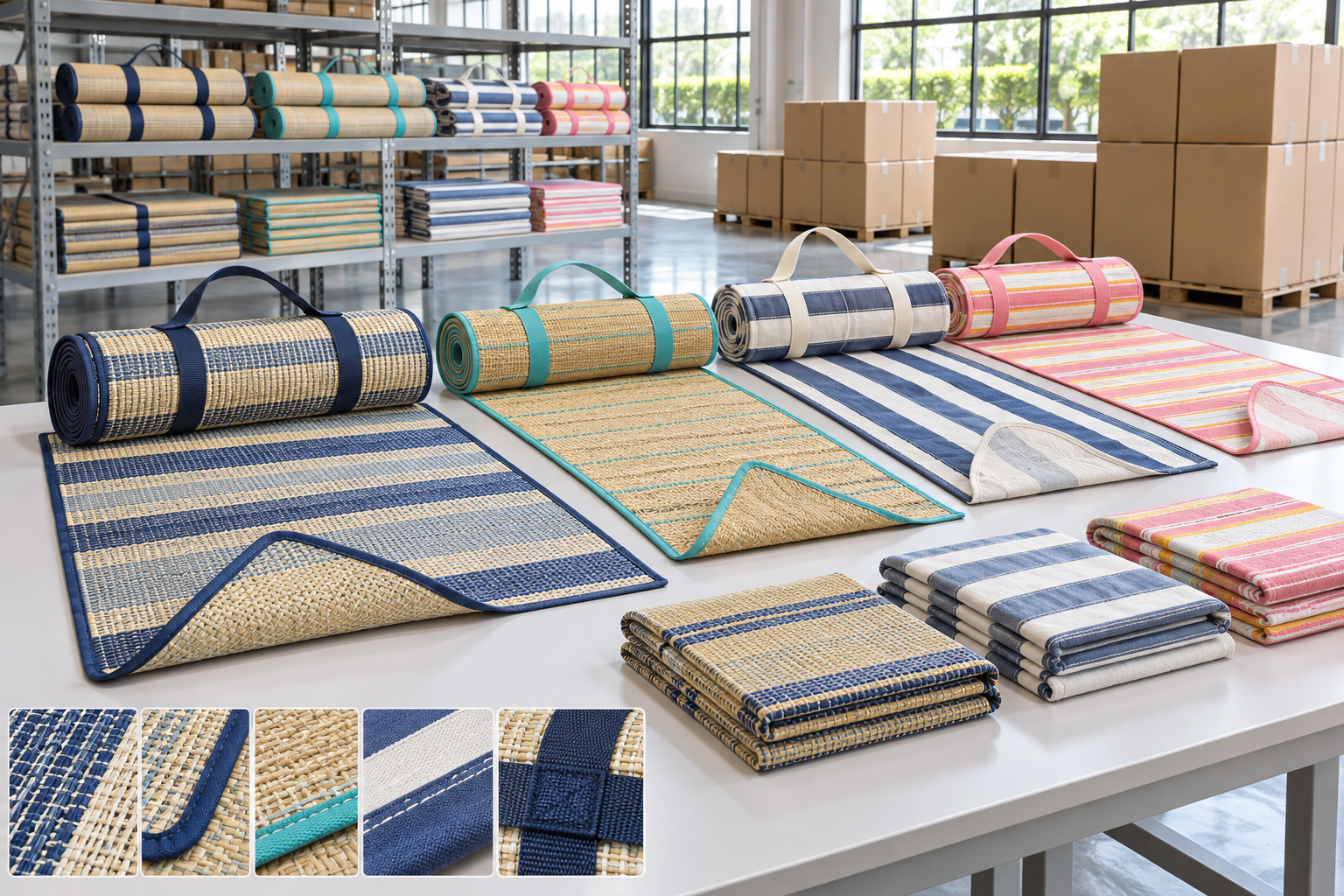
When you source a beach mat oem warranty and returns policy as part of a manufacturing order, the policy is not an afterthought. It is the agreement that decides how defects are defined, how claims are evidenced, who pays for return movement, and what remedy applies when a batch does not match the approved specification. For Malaysia buyers importing for retail, promotional, hospitality, or distribution programs, the clearest approach is to agree the warranty and returns policy before production starts, in the same document set as the material, size, printing, stitching, and packing specification. This article sets out evergreen procurement actions, comparison criteria, and questions to ask so the buyer and supplier agree the same terms in writing.
A useful policy does not rely on general assurances. It names the product covered, the batch it applies to, the inspection method the buyer will use, the evidence required for a claim, the time window for reporting agreed in the order, and the remedy options the parties have accepted. Every item that is left vague at RFQ stage becomes a negotiation after delivery. The sections below keep the focus on beach mat manufacturing decisions and on the warranty-returns facet only, so you can compare suppliers on equal terms and build an RFQ that produces comparable answers.
What a Beach Mat Warranty and Returns Policy Should Cover in Manufacturing
Start by separating three different situations that buyers often combine into one clause. The first is a manufacturing defect, where the delivered beach mat differs from the approved sample or written specification. The second is transit or packing damage, where the product was made to specification but arrived damaged because packing, carton protection, or loading was insufficient for the agreed delivery route. The third is a buyer change or overstock situation, where the product matches the specification but the buyer no longer needs it. A clear warranty and returns policy treats each situation separately, with a different evidence route and a different remedy discussion.
For manufacturing defects, ask the supplier to confirm in writing which characteristics are covered. Useful fields to agree include material composition and weight as specified, dimensions and tolerance as agreed by both parties, edge finishing and stitching quality, print or logo position and colour reference as approved, closure or strap function where fitted, and cleanliness and odour on arrival as described in the inspection plan. Do not assume a characteristic is covered if it is not listed. If a characteristic matters for acceptance, name it in the specification and repeat it in the warranty clause.
For packing damage, define what counts as acceptable carton condition, inner packing, and moisture protection for the agreed shipment method. Ask how individual mats, inner packs, and export cartons will be labelled for batch traceability so a claim can be linked to a specific production lot. Without lot identification, it is difficult for either party to isolate an issue, check retained samples, or agree whether a remedy applies to part of a batch or to the whole batch.
For non-defect returns, state the position before ordering. Many OEM orders are produced to a buyer-specific size, colour, print, or logo, so the return route may differ from standard stock items. Rather than assuming a return is possible, ask the supplier to state in the quotation whether customised beach mats can be returned when they conform to specification, and if so, under what written conditions. Recording a clear no-return position for conforming custom goods in the order is better than discovering a disagreement later.
How to Structure a warranty and returns policy for Beach Mat Manufacturing Agreements
Use a numbered process that both parties can follow when an issue is found. The following steps work as a drafting framework for the order documents. Adapt the wording to your own purchase terms and ask the supplier to confirm acceptance of each step in the quotation response.
- Specify the approved reference, including the signed sample, specification sheet, artwork file, and packing instruction that production must match.
- Specify the inspection the buyer will carry out on receipt, who will perform it, and how sampled units will be selected from each batch.
- Ask the supplier to agree the evidence format for a claim, such as dated photographs of the defect, carton and lot labels, and a written count of affected and inspected units.
- Specify the reporting window and contact route agreed in the order, and require acknowledgement of receipt of a claim within the response time stated in that agreement.
- Ask the supplier to state the assessment process, including whether retained samples or returned samples will be examined before a decision is made.
- Specify the available remedies the parties accept, such as repair where feasible, replacement of affected units, credit against a future order, or refund for affected units, and the order in which they will be considered.
- Specify who bears the cost and arrangement for returning affected goods, for sending replacements, and for any inspection at destination, as agreed in writing.
- Require written closure of each claim, recording the batch, the finding, the remedy applied, and any change to specification or packing for future orders.
This structure keeps the discussion factual. The buyer provides evidence linked to an approved reference, the supplier assesses against that same reference, and the remedy follows the options already agreed. It also creates a record that improves the next order, because recurring issues can be addressed by tightening the specification, the sample approval, or the packing instruction rather than by repeating the same claim.
Buyer Decision Table for Beach Mat Manufacturing and Warranty Terms
| Decision Area | What to Define Before Ordering | What to Ask the Supplier to Confirm | Buyer Acceptance Action |
|---|---|---|---|
| Defect definition | Which material, size, stitching, printing, and finishing characteristics count as non-conforming against the approved sample | That the listed characteristics are covered and how each will be checked | Compare delivered units to the approved sample and specification sheet on receipt |
| Inspection and sampling | How units will be sampled from each batch and who carries out the inspection | That the proposed inspection approach is acceptable and traceable to lot labels | Record inspected and affected counts with photographs of units and labels |
| Claim evidence | Photographs, lot identification, and written description required to open a claim | The exact evidence format and delivery address for claim documents | Submit a complete evidence pack in the agreed format before returning any goods |
| Remedy options | Whether replacement, credit, refund for affected units, or repair is acceptable to the buyer | Which remedies the supplier offers and in what order they apply | Choose only from remedies recorded in the order agreement |
| Return movement | Who arranges and pays for return shipment of affected units and shipment of replacements | Cost responsibility and packing requirements for any return movement | Follow the agreed return instruction and retain shipment records |
| Customised goods | Whether logo, colour, size, or print customisation changes the return position for conforming goods | The return position for customised goods that match specification | Confirm the position in writing before placing the order |
| Packing damage | Carton, inner pack, and moisture protection required for the agreed delivery route | The packing method to be used and how damage will be evidenced | Photograph outer cartons and inner packing before unpacking the full batch |
| Claim closure | What written record closes a claim and what changes apply to future orders | That a closure note will be issued for each resolved claim | File the closure note with the batch records and update the next RFQ |
Warranty and Returns Policy Considerations for Malaysia Beach Mat Buyers
Malaysia buyers should keep the product and warranty decision primary and address local delivery and storage through agreed fields, not assumptions. Ask the supplier to confirm the delivery point, the party responsible for import clearance tasks assigned in the trade term you select, and the documents that will accompany the shipment, such as the packing list, invoice description, and lot list. The warranty and returns policy should name the same delivery point and document set, so a claim made after receipt can be matched to the shipment that arrived.
Storage and handling after receipt also affect claims. Agree in the order who is responsible for the goods from the point of delivery, how long the buyer has under the agreed terms to inspect and report concealed damage that is not visible from outer cartons, and what storage conditions the buyer will maintain before inspection. If beach mats will be held in a warehouse before distribution within Malaysia, ask the supplier to state any storage guidance for the specified material, and record that guidance in the product file. Claims for issues that arise after onward distribution to your own customers should be separated from claims for issues present on receipt, with different evidence for each route.
Language and version control matter in cross-border orders. Specify which language version of the specification, warranty clause, and returns procedure controls if translations differ, and require that any change to the policy after order confirmation be agreed in writing by both parties. Also specify the currency and payment reference to be used if a credit or refund for affected units is the agreed remedy, so finance teams on both sides can process the closure without a separate negotiation. These are documentation decisions the buyer defines in the RFQ; they do not depend on any particular supplier claim or capability.
Finally, consider the onward promise you make to your own buyers. If you sell, distribute, or supply the beach mats to retailers, venues, or promotional clients in Malaysia, align your internal handling for their returns with the terms you have agreed upstream. Do not promise a remedy to your customer that your supplier agreement does not support for the same defect and evidence. Map the two policies side by side before launch, and adjust either your customer wording or your supplier RFQ so the defect definitions, evidence, and remedy routes are consistent.
Comparing Supplier Proposals on Beach Mat Manufacturing Warranty Terms
When quotations arrive, compare the warranty and returns policy wording as carefully as the unit price and product specification. A lower price with an undefined claim process can cost more in time and disputed batches than a clear policy from another supplier. Build a simple comparison sheet using only the fields the suppliers themselves have stated. Do not fill gaps with assumptions; mark unstated items as to be confirmed and return them to the supplier as follow-up questions.
Compare the defect list each supplier accepts, the evidence each requires, the assessment steps each describes, the remedies each offers, and the cost responsibility each states for return and replacement movement. Compare also how each supplier handles partial-batch issues, whether a remedy can apply to affected units only, and how lot traceability is maintained. Ask each supplier the same missing questions so the final comparison is like for like.
Pay attention to consistency inside a single proposal. If the product specification promises a particular material, print method, or packing standard, the warranty clause should cover non-conformance against that same specification. If the quotation excludes a characteristic that the sales description emphasises, ask for clarification in writing before ordering. The time to resolve a mismatch between the specification and the warranty wording is at quotation stage, when both documents can be amended and reissued under the same version date.
Sample approval is part of the warranty foundation. Require that the approved pre-production or reference sample, together with its written specification, is identified in the order as the benchmark for claims. If the sample and the bulk production method differ in any agreed way, record that difference. A claim can then be assessed against a single, shared reference rather than against memory or photographs alone.
RFQ Checklist
- Ask the supplier to state in the quotation which beach mat characteristics are covered as manufacturing defects against the approved sample and specification.
- Ask the supplier to confirm the claim evidence required, including photographs of affected units, carton and lot labels, and inspected and affected counts.
- Require the manufacturer to confirm lot and batch identification on inner packs and export cartons for traceability of any claim.
- Specify the inspection method, sampling approach, and reporting window you will use on receipt, and require written acceptance of that process.
- Ask the supplier to list the remedy options offered for non-conforming units, such as replacement, credit, refund for affected units, or repair where feasible.
- Require the manufacturer to state who arranges and pays for return movement of affected units and for shipment of any replacements.
- Specify the return position for customised beach mats that conform to specification, including logo, colour, size, and print customisation.
- Ask the supplier to confirm the packing method, carton protection, and moisture protection to be used for the agreed delivery route to Malaysia.
- Require the manufacturer to describe the claim assessment steps and the written closure record that will be issued for each resolved claim.
- Specify the controlling language version, currency for any agreed credit or refund, and delivery point to be named in the warranty and returns policy.
- Ask the supplier to confirm any storage guidance for the specified beach mat material and to supply that guidance in writing with the shipment documents.
Use this checklist as the closing section of your RFQ and require a point-by-point response. A supplier reply that answers each item in order gives you a policy you can attach to the purchase order, compare fairly against other proposals, and rely on if a batch needs assessment. That written, agreed warranty and returns policy is the practical protection for a beach mat OEM manufacturing order, because it turns expectations about quality, evidence, and remedies into a shared process agreed before production begins.
Discuss Your Requirements
Review our manufacturing capabilities, then share your specifications for a supplier-fit review.