Beach Mat OEM Vendor Audit Preparation for Canada Buyers
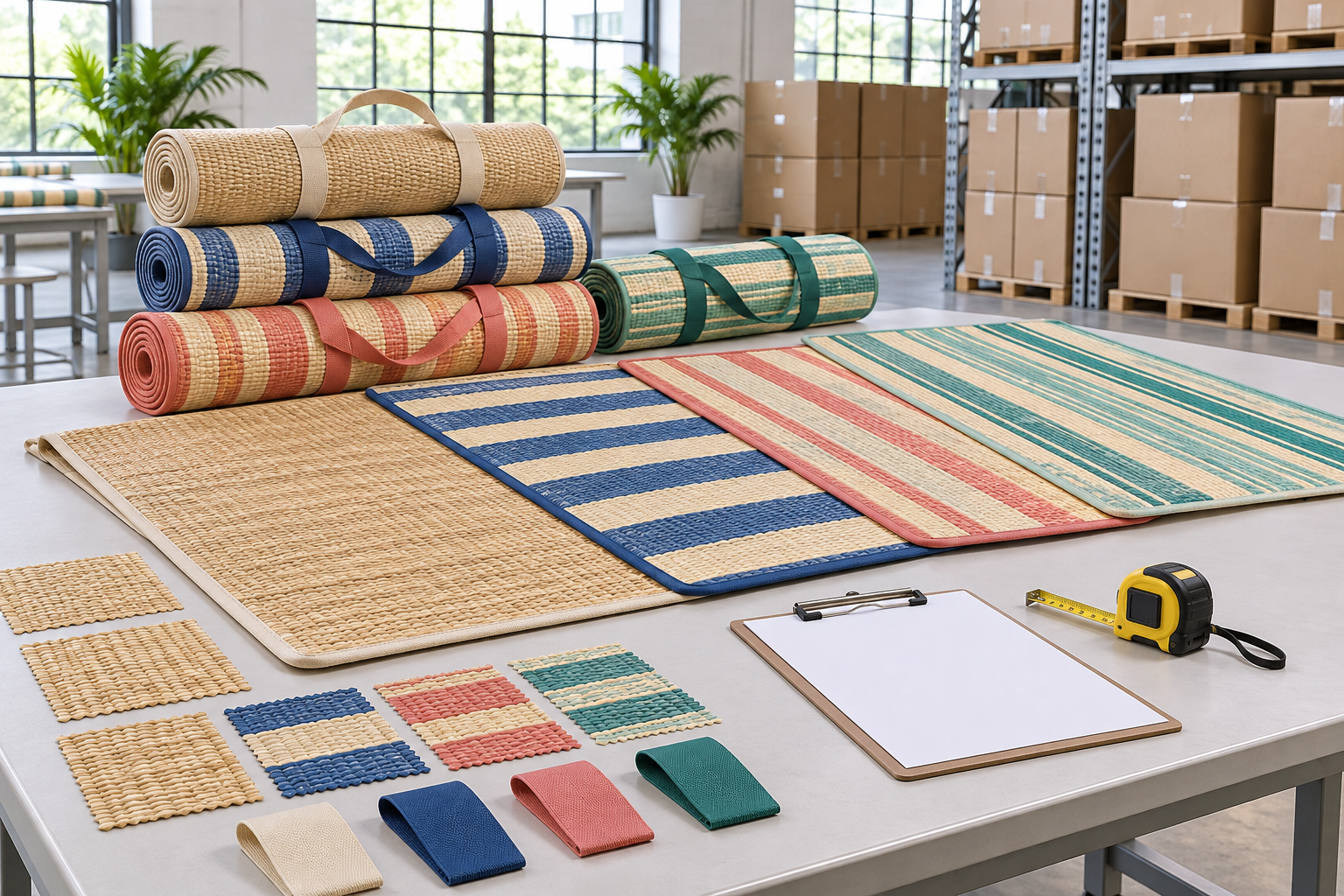
Beach mat OEM vendor audit preparation helps Canadian B2B buyers structure how they review a supplier before placing a manufacturing order. Instead of relying on product photos or a single sample, an audit preparation process defines what to check, what documents to request, what questions to ask, and what must be agreed in writing before approval.
For buyers in Canada sourcing a beach mat range for retail, promotional, hospitality, or private label programs, the goal is not to assume performance from a listing. The goal is to compare suppliers on the same criteria: product definition, materials, construction, manufacturing controls, inspection approach, packaging, and delivery terms. This article keeps the focus on that single task — vendor audit preparation for beach mat manufacturing — and provides a decision table and RFQ checklist you can adapt to your own specification.
Use the sections below to build an audit file before you request quotations, approve samples, or commit to production. Where a detail matters to your order, ask the supplier to confirm it in writing and keep that confirmation with your purchase records.
Vendor Audit Preparation Scope for Canada Beach Mat Buyers
Start by defining the scope of the audit in one page. State the product family clearly as beach mat, the intended sales market as Canada, and the type of program you are buying for, such as own-brand retail, seasonal promotion, or ongoing replenishment. Suppliers respond more usefully when the scope is narrow and consistent across all candidates.
Prepare a product definition sheet before contacting suppliers. Include the product form you want, such as roll, fold, or flat mat, the carrying or storage format if any, and how the end user is expected to use and clean the mat. Do not leave intended use vague, because material choice, edge finishing, and packaging decisions all depend on it.
Next, list what the audit will and will not cover. A practical preparation scope usually covers sample evaluation, material identification, construction review, manufacturing process discussion, quality control points, packaging review, and commercial terms. It should also note who on the buyer side approves each area, so that a good sample does not automatically override an unresolved packaging or documentation question.
Finally, set the decision rule in advance. Decide whether a supplier must pass all critical checks before quotation, or whether some items can be resolved during sampling. Writing this rule before the audit prevents later pressure to approve a supplier based only on price or responsiveness.
Materials, Construction and Sample Review
Material review is central to beach mat OEM vendor audit preparation. Ask each supplier to identify the main material, any backing or coating, edge binding or sealing method, and any straps, handles, or accessories included with the product. Require the same level of detail from every supplier so comparisons are fair.
Do not accept a generic material name alone. Ask the supplier to describe the material composition as they will supply it, how it is sourced or produced for your order, and what alternatives they propose if your first choice is unavailable. If colour, pattern, or surface texture matters, specify how you will approve it, for example by signed sample, photo approval under agreed conditions, or physical swatch retained by both parties.
For construction, review how the mat is joined, finished, and presented. Ask about stitching, welding, hemming, printing, or surface treatment steps that apply to your design, and where each step happens in their process. Ask how they handle variation between samples and bulk production, and what they will do if bulk output differs from the approved sample.
Sample review should follow a written checklist rather than personal impression. Check appearance, feel, flexibility, edge finish, odour on opening, packaging fit, and consistency across multiple sample pieces if available. Record what you checked, when, and what remains unconfirmed. Keep at least one approved sample clearly labelled and stored, and ask the supplier to confirm they will retain a matching reference for production comparison.
Manufacturing Process and Quality Control Review
A vendor audit is also a review of process, not only product. Ask the supplier to walk through their manufacturing flow from material receipt to final packing, in order. Look for clear handover points where material is checked, work in progress is inspected, and finished goods are reviewed before packing.
Prepare specific process questions in advance. Ask how orders are scheduled, how your specification is communicated to production staff, how changes are controlled after approval, and how non-conforming pieces are separated and handled. Ask who is responsible for final inspection and what records, if any, they keep for each production lot.
For quality control, focus on agreement rather than assumption. Specify the inspection points you expect, such as incoming material check, in-process check, and pre-shipment review, and ask the supplier to confirm which of these they can provide for your order. Ask how defects are defined for this product, how they are counted, and what action follows if an inspection does not meet the agreed criteria. Avoid assuming an inspection method or acceptance level applies unless you and the supplier have agreed it in writing for this order.
Also discuss rework, replacement, and communication timelines in practical terms. Ask how issues found at inspection are reported, what evidence the supplier will share, such as photos or inspection notes for the specific lot, and how corrective steps are confirmed before shipment. The aim is a shared process you can reference later, not a general promise of quality.
Buyer Decision Table for Beach Mat OEM Vendor Audit Preparation
Use the table below to compare suppliers side by side using only buyer-defined process checks. Complete one column per supplier in your own working copy, and do not mark an area as approved until you have the supplier confirmation or sample evidence you requested.
| Decision Area | What to Ask the Supplier to Confirm | Buyer Action Before Approval | Risk if Left Unclear |
|---|---|---|---|
| Product definition | Product form, intended use, and included accessories for the beach mat as quoted | Compare the written definition against your product sheet and approved sample | Bulk goods that differ from the range you intended to sell in Canada |
| Material identification | Main material, backing or coating, and any proposed substitutes | Require written material details and retain an approved swatch or sample | Unagreed substitution or inconsistency between sample and production |
| Construction and finish | Joining method, edge finish, printing or surface treatment, and tolerance approach agreed for this order | Inspect sample construction and confirm the method in the order specification | Weak points, uneven finish, or disputes over what was agreed |
| Colour and design approval | How colour, pattern, and artwork, if any, will be approved and retained as reference | Approve a physical reference and keep a signed copy of the final design file or sample | Colour or pattern variation with no agreed reference to resolve it |
| Manufacturing process | Production flow, change control, and responsibility for each process step | Review the step-by-step flow and note any outsourced step the supplier discloses | Loss of control after approval and difficulty tracing where an issue arose |
| Quality control and inspection | Inspection points, defect definitions, reporting method, and action if criteria are not met | Specify inspection expectations in the RFQ and confirm them in writing before production | Shipment of goods that were never checked against your criteria |
| Packaging and labelling | Unit packaging, outer packaging, and labelling content and placement as agreed for your program | Approve packaging samples or mock-ups and confirm labelling text you supply | Repacking costs, damaged presentation, or labelling that does not match your program needs |
| Commercial and delivery terms | Quotation scope, payment terms, delivery point, and what is included or excluded | Compare total landed cost elements on the same basis for all suppliers | Misunderstood costs or delivery responsibilities after the order is placed |
Review the completed table as a team. If a supplier is strong on product but weak on documentation or inspection reporting, record that gap explicitly and decide whether it can be closed before approval or whether it is a reason to select another supplier.
Documentation, Packaging and Logistics Alignment for Canada
Documentation preparation is often where audits stall, so request it early. Ask the supplier what product information, material statements, care instructions, and test or inspection documents, if relevant to your specification, they can provide for the exact product being quoted. Do not assume a document for a similar product applies to yours. Require the supplier to link any document they share to the specific material and construction in your order.
For a Canada program, confirm packaging and labelling details as buyer-supplied requirements. Specify the language, content, and placement of labels and inserts you need for your own sales channel, and ask the supplier to confirm they can apply them exactly as supplied. Provide final artwork and text from your side and keep proof approval in writing. This avoids presenting labelling as a supplier assumption and keeps responsibility clear.
Packaging review should cover both protection and presentation. Ask how individual mats are folded or rolled, how they are protected from moisture and abrasion in transit, how outer cartons are filled, and how mixed designs, if any, are separated and identified. Request a packed sample or clear packing photos for the exact configuration you will order, and check that the packed size and weight the supplier states match what you need for your freight and warehousing calculations.
For logistics, align on delivery terms before you compare prices. Specify the delivery point, who arranges and pays for each leg of transport, and what information you need for landed cost calculation, such as packed dimensions, packed weight, and carton quantity as supplied. Compare suppliers using the same delivery basis, and ask each supplier to state clearly what their quotation excludes.
RFQ Checklist
Use this checklist when you issue your request for quotation. Each item should be answered or confirmed by the supplier in writing so you can complete the audit file and the decision table on the same evidence.
- Specify the beach mat product form, intended use, included accessories, and the approved sample reference the quotation must match.
- Ask the supplier to confirm the main material, backing or coating, edge finish, and any substitute materials they propose.
- Require the supplier to describe the manufacturing steps for your order in sequence and to disclose any step handled by another party.
- Specify the colour, pattern, and design approval method and require the supplier to retain a matching production reference sample.
- Ask the supplier to confirm inspection points, defect definitions, and how inspection results for your lot will be reported before shipment.
- Require the supplier to provide product and material documentation that applies specifically to the material and construction being quoted.
- Specify unit packaging, outer packaging, carton quantity, and labelling text and placement exactly as you require for your Canada program.
- Ask the supplier to state packed size, packed weight, quotation scope, exclusions, payment terms, and delivery terms on a consistent basis for landed cost comparison.
- Require the supplier to confirm how specification changes after approval will be communicated, priced, and approved before production continues.
- Specify the action, reporting, and approval steps that will apply if inspection or sample review does not meet the agreed criteria.
Close the audit by recording a clear outcome for each supplier: approved, approved subject to named open items, or not approved, with the date and the person who made the decision. Keep the product sheet, sample notes, decision table, supplier confirmations, and final RFQ together. That file becomes your reference if questions arise during production, shipment, or receipt, and it makes the next beach mat OEM vendor audit preparation cycle faster because your criteria are already defined.
Discuss Your Requirements
Review our manufacturing capabilities, then share your specifications for a supplier-fit review.