Beach Blanket OEM Communication Workflow Review for United States Buyers
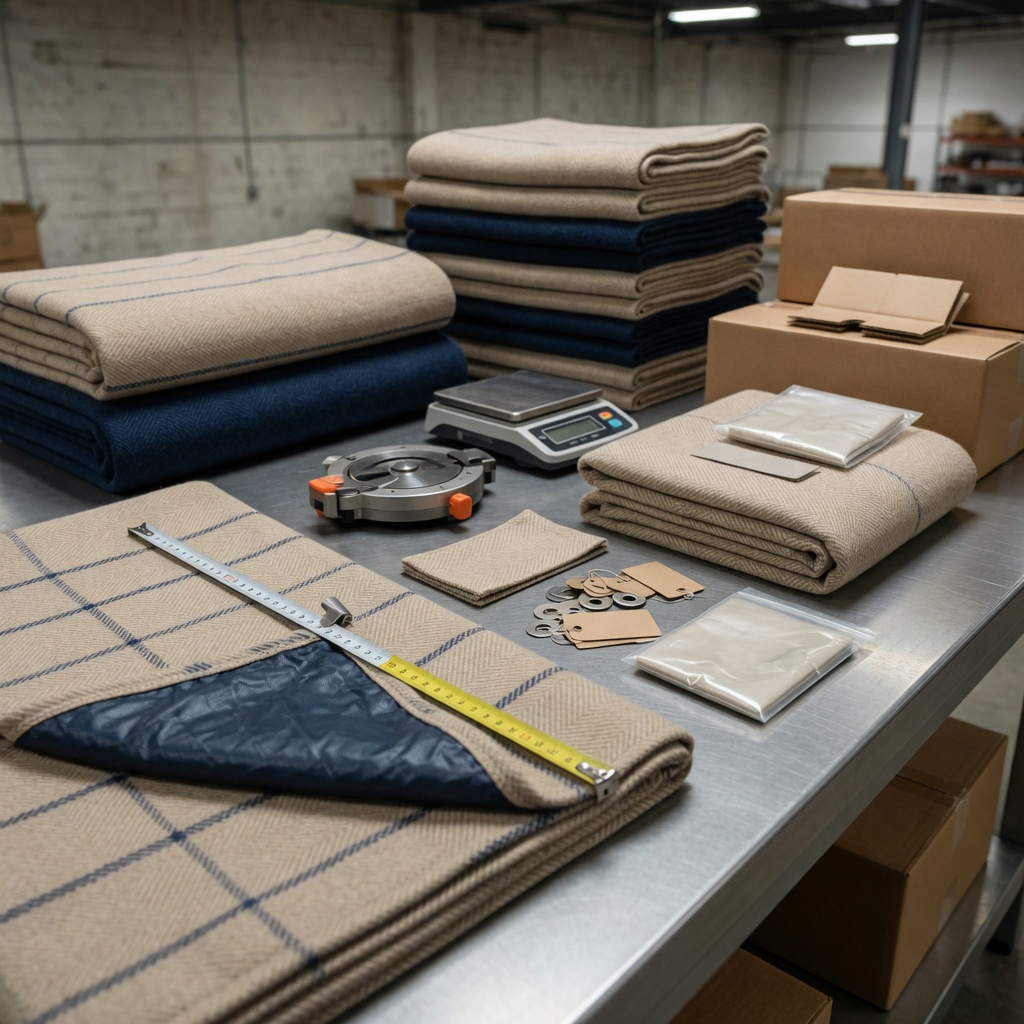
United States B2B buyers should run a beach blanket OEM communication workflow review as a written control plan, not a chain of informal emails. Quotes are comparable only after finished size and tolerance, face fabric and backing, weight or GSM, construction, artwork and placement, folding and packing, label copy, quantity by SKU, Incoterms, sample gates, and named approvers are locked in writing—before a mill cuts, dyes, or prints.
Public OEM process pages for blankets and beach towels publish related sequences a United States buyer can use as a communication template, not as this site’s lead time, certification, or bill of materials: inquiry alignment on specifications, staged sampling, then bulk production with incoming, in-process, and final QC plus pack-out checks for hangtags, care labels, barcodes, and carton marks. Force every day-count, measurement, and label line into the RFQ and the pre-production (PP) sample sign-off before mass cutting.
Byline. Vincent Xi, Editorial Author (author profile). This page is an editorial manufacturing brief for United States beach blanket programs. It does not rank suppliers and does not claim mill certifications, factory visits, tests, awards, or customer outcomes. The only approved experience basis used here is that public author listing.
Decision path. Specify the packet → compare written echoes and quotes → verify samples and QC photos against the packet → approve only in writing → order bulk only after PP sign-off and first-piece acceptance.
Communication workflow review gates from first inquiry to bulk approval
A usable communication workflow review has four locked gates—an editorial grouping of the cited inquiry, specification, sampling, and QC stages. Each gate needs a buyer artifact, a supplier artifact, a named approver, and a stop-the-line rule. Stage content is mapped from the cited public pages onto a beach blanket manufacturing RFQ; those pages are not a process sheet for this site.
Gate 1 — Inquiry alignment. One published OEM blanket process page describes work that begins with inquiry and communication aligning specifications, fabrics, customization, quantity, and delivery, before mockups or staged production. Treat the mill’s first reply as a spec echo, not a brochure. OEM Blanket Manufacturing Process Step by Step
Gate 2 — Specification engineering. A published beach-towel OEM/ODM workflow describes discovery of target market, quantity, timeline, and packaging, then specification engineering that confirms size, GSM, material, finish, and craft method. Map those communication fields onto a beach blanket RFQ: picnic versus sand-resistant throw, woven versus printed face, waterproof backing yes or no. That source page is about towels; the fields transfer only if the mill echoes them for the actual beach blanket construction. Beach Towel OEM/ODM Factory for Private Label Programs
Gate 3 — Sample hierarchy. Sampling is not one shipment. Published workflows separate blank or material samples, artwork or print samples, and pre-production samples that become the bulk benchmark after written confirmation. A picnic/outdoor OEM buyer guide states that sampling must confirm fabric, size, weight, stitching, waterproof layer, logo position, folding method, and package. Custom Camping Blanket: OEM Buyer Guide
Gate 4 — Bulk QC communication. A published beach-towel OEM/ODM page states that bulk production uses incoming, in-process, and final QC, then pack-out verification. Findings belong in writing: photo set, defect class, quantity affected, and disposition—not a verbal “looks good.” Beach Towel OEM/ODM Factory for Private Label Programs
Tight gates add calendar days before mass cutting. Chat-based “approvals” save days up front and shift cost into wrong GSM, reversed logos, relabeling, and air freight for United States delivery.
Opening OEM inquiry packet for a beach blanket RFQ
The first inquiry is the cheapest place to prevent a failed beach blanket manufacturing run. Send one packet.
Include:
- Use case: beach picnic, sand-resistant throw, branded event giveaway, or retail set (this drives fabric and backing).
- Finished size and tolerance (length × width, plus acceptable mm or inch variance).
- Face fabric, backing, fill if any, and target weight or GSM, with units on the same line.
- Construction: hem or binding, stitch type, quilting if any, corner loops or weights.
- Artwork: vector logo, print or embroidery method, color standard, placement drawing with distances from edges.
- Folding method and packed size.
- Quantity by SKU and colorway, first-order versus repeat.
- Target market stated as United States (retail, promo, or e-commerce), because label language and carton marks follow that market.
- Requested Incoterms, place of delivery, and latest acceptable cargo-ready date.
- Sample path: blank, strike-off/artwork, then PP sample as the bulk standard.
- Sample cost, who pays courier, and whether an artwork change restarts the sample clock.
- Named buyer approver and a written yes/no window (set your own hours; do not assume inbox time).
A camping/picnic OEM guide lists RFQ coverage as use case, fabric, size, weight, logo, waterproof, packing, quantity, market, and delivery date—10 named fields. Units: field count as written on that page. Scope: that published buyer-guide list for custom camping/picnic blankets, used here as a minimum communication packet for a beach blanket. As-of: the undated page; verify the live mill form. Add United States label and carton copy as buyer-owned lines rather than assuming the source page includes them. Custom Camping Blanket: OEM Buyer Guide
Over-specifying GSM and stitch density can raise the quoted unit price. Under-specifying them makes every quote non-comparable. For a United States private-label retail SKU, a quote that cannot be audited against size, GSM, pack-out, and carton data is not a usable manufacturing offer.
Sample types, staged days, and written confirmation
Do not accept “a sample is on the way” as a workflow. Require named sample types and a written pass/fail.
One OEM blanket process page describes mockups and staged production as 2 days initial, 3 days dyeing, and 7 days printing, then delivery for review of feel, print clarity, and accuracy, with the confirmed sample serving as the mass-production benchmark. Units: days as written on that page. Scope: that manufacturer’s published OEM blanket sampling sequence, not a beach-blanket-wide industry standard and not this site’s lead time. As-of: undated process page—confirm whether the figures are working days or calendar days, whether artwork is already frozen, and whether a non-printed woven beach blanket has a printing stage at all. OEM Blanket Manufacturing Process Step by Step
A beach-towel OEM page splits samples into blank samples for material, artwork samples, and pre-production samples as the approved bulk benchmark. Use the same three-layer communication idea for a beach blanket even if the mill’s names differ. Beach Towel OEM/ODM Factory for Private Label Programs
Example calendar (assumption to verify in the supplier quote, not a mill commitment): 2 + 3 + 7 = 12 days of staged work before a print-capable sample exists, plus international courier. If courier is 5–8 calendar days (assumption to verify with the forwarder, not a published transit standard), a United States reviewer may see the first complete printed sample only after about 17–20 calendar days. Confirm holidays, lab-dip loops, and whether the published 2/3/7 figures restart after an artwork change.
Put these review criteria on the PP form:
- Hand-feel and face/back contrast versus the approved blank.
- Color versus the agreed swatch, lab dip, or signed strike-off.
- Size within the stated tolerance.
- Stitching, edge finishing, and waterproof-layer adhesion if specified.
- Logo position and clarity.
- Fold and package versus the retail or shipper drawing.
- Label copy, language, and attachment method.
The picnic/outdoor OEM guide names 8 sampling confirmation items: fabric, size, weight, stitching, waterproof layer, logo position, folding method, and package. Units: item count as written on that page. Scope: that published camping/picnic OEM buyer guide, copied onto a beach blanket PP form. As-of: undated page. Add United States label copy as a buyer-owned extra line and require a photo of each item. Custom Camping Blanket: OEM Buyer Guide
Approving a blank only (material, no print) speeds the program and leaves print registration and color open. Approving a PP sample that is not made on bulk machines, bulk fabric, and bulk print method can pass the review and still fail in mass production. State that requirement in the RFQ.
Production quality review and how findings should be communicated
Once bulk starts, written QC is the early-warning system for a United States buyer.
One beach-towel OEM workflow states that bulk production uses incoming, in-process, and final QC checkpoints—3 in-plant QC layers—then pack-out verification for hangtags, care labels, barcodes, and carton marks—4 pack-out items. Units: checkpoint counts as written on that page. Scope: the published beach-towel OEM/ODM service page, used here as a communication checklist for beach blanket pack-out, not as a claim that towels and blankets share one factory line. As-of: the undated page; verify actual inspection frequency, defect standard, and whether photos are shared by default. Beach Towel OEM/ODM Factory for Private Label Programs
A custom camping/picnic blanket OEM guide lists production checks for color consistency, sewing quality, stains, edge finishing, label accuracy, and carton marks—6 named checks. Units: check count as written on that page. Scope: that published camping/picnic OEM buyer guide; as-of: undated page. Use that list as the minimum photo set in production reports. Custom Camping Blanket: OEM Buyer Guide
Required production messages:
- Incoming: fabric and backing lot numbers versus the approved PP; fail = hold dye or print.
- In-process: first-piece photos of print, stitch, and cut size; fail = stop until written disposition.
- Final: agreed sampling plan, defect photos, and quantity by class.
- Pack-out: photo set of hangtags, care labels, barcodes, and carton marks versus the United States carton-mark drawing.
Daily photo reports increase mill admin time and can raise the quoted price. A single end-of-line inspection cannot show when color drift started. If color, logo placement, or label copy is a fail item on a first-run United States retail program, specify first-piece plus mid-lot plus final in the RFQ rather than a single final report.
Do not treat a passed QC report as a substitute for the signed PP sample. The confirmed sample remains the mass-production benchmark in the published OEM blanket process overview. OEM Blanket Manufacturing Process Step by Step
United States labeling, landed cost, and delivery fields in beach blanket manufacturing RFQs
Keep the sales market explicit: this brief is for United States B2B buyers. Do not paste another market’s care copy or carton language onto a United States SKU.
Labeling communication. Specify in the tech pack and on the PP sample: fiber content, care instructions, country-of-origin presentation, hangtag claims, importer or manufacturer identity as the buyer’s counsel directs, and barcode owner/type. Pack-out verification on the published towel OEM page already names hangtags, care labels, barcodes, and carton marks as checkpoints; those items should be separate lines on the United States packing approval form. Beach Towel OEM/ODM Factory for Private Label Programs This article does not certify labeling or import compliance and does not quote statutory text. Counsel and the customs broker must confirm live rules for the actual SKU, especially if the blanket is marketed for infants or includes stuffed parts. Distinguish a legal requirement from a mill habit: a mill may already sew a care label; the buyer still owns the words.
Landed-cost communication. Quotes that omit carton outer size, gross weight, and packing method are not comparable. Ask for pieces per inner pack and per carton; carton L × W × H; and gross/net weight in kg.
Example calculation (assumption to verify in the supplier quote and with the forwarder, not real mill data): 500 beach blankets packed 10 per carton = 50 cartons; if each carton is 18 kg gross, actual weight is 900 kg. If dimensional weight is higher, freight follows the dimensional figure. Use the mill’s real carton data in the worksheet.
Delivery communication. Lock Incoterms (for example FOB named port versus DDP United States door), cargo-ready date, and the sample-versus-bulk calendar as separate lines. The published 2 / 3 / 7 sampling-day sequence is not ocean transit and is not a United States inland appointment. OEM Blanket Manufacturing Process Step by Step
DDP simplifies the United States receiver’s dock but can hide duty, brokerage, and delay inside one price. FOB makes those costs visible and comparable but requires the buyer to own the forwarder. For a first OEM beach blanket manufacturing order, an auditable split usually beats a bundled door price that cannot be checked.
Buyer decision table: communication artifacts versus order risk
Every row is a specify, compare, verify, approve, or order action for a United States beach blanket OEM program.
| Communication gate | Buyer artifact to send | Supplier artifact to require | Compare / pass rule | Do not release the next stage if |
|---|---|---|---|---|
| Inquiry alignment | One-page use case, size, fabric/backing, quantity, United States market, delivery date | Written spec echo | Echo matches size, fabric, GSM or weight, and qty by SKU | Any field is “TBD” or “as sample later” |
| Specification engineering | Tech pack: GSM or weight, stitch, edge, print method, fold, pack | Confirmed BOM and process route | BOM names face, back, thread, and print/dye method | Substitute fabric is offered without a new quote line |
| Blank / material sample | Approval form with hand-feel and weight checks | Physical blank plus measured size/weight | Weight/GSM and hand-feel versus the inquiry | Only a photo is sent when feel is a buy point |
| Artwork / strike-off | Locked vector file, placement drawing, color standard | Strike-off or printed swatch | Color and logo position versus drawing; edge distances measured | “Close enough” color without a signed delta |
| PP sample (bulk benchmark) | Written PP checklist (picnic-guide sampling items plus United States labels) | PP sample made as specified plus measurement sheet | Fabric, size, weight, stitch, waterproof layer, logo, fold, package, labels all pass | PP is handmade or uses leftover fabric not on the BOM |
| Production kickoff | Signed PP form and “do not cut” until written release | First-piece report (incoming + in-process) | First piece matches PP photos and measurements | Dye lot or print method differs from PP |
| In-process QC | Agreed photo frequency and defect classes | Incoming, in-process, and final reports | All three checkpoint types completed; defects within the agreed plan | Only a final inspection exists |
| Pack-out | United States carton-mark drawing, care-label copy, barcode file | Pack-out photos of hangtags, care labels, barcodes, carton marks | Hangtags, care labels, barcodes, and carton marks match the drawing | Marks use the wrong market language or omit origin |
| Ship release | Packing list, carton count, weights and dimensions | Export packing list matching the quote | Carton count × pieces = order qty; weights usable for freight | Weights/dims missing so landed cost cannot be checked |
Practical RFQ checklist for a beach blanket manufacturing order
Use this list to specify, compare, verify, approve, or order. Each item is a communication control, not a mill promise.
- State the product as a beach blanket and name the United States sales channel (retail, promo, or e-commerce).
- Define use case so fabric and waterproof backing can be selected, as picnic/outdoor OEM guides recommend.
- Give finished size, tolerance, and units (cm or in) on the same page as folded size.
- Name face fabric, backing, fill, and target GSM or weight; require the mill to echo units.
- Specify edge finish, stitch type, and any corner loops or weights.
- State print or embroidery method and attach vector artwork plus a placement drawing.
- Require a lab dip or strike-off before PP if color is branded.
- List the three sample types you will pay for: blank/material, artwork, and PP/bulk benchmark.
- Ask the mill to state sample days by stage (initial / dye / print) in working versus calendar days, then compare against the published 2-day initial, 3-day dyeing, and 7-day printing example sequence and verify current figures on the live page and in the quote.
- Name the PP sample as the mass-production benchmark after written confirmation.
- Require incoming, in-process, and final QC, with photo evidence and a named defect standard.
- Require pack-out verification of hangtags, care labels, barcodes, and carton marks.
- Attach United States care-label copy, origin marking, and hangtag claims as buyer-owned text.
- State quantity by colorway, first-order versus repeat, and whether leftover fabric may be used.
- Name Incoterms, cargo-ready date, and whether samples travel by courier on a separate clock.
- Require carton L × W × H, gross/net kg, and pieces per carton for a landed-cost worksheet.
- Name the buyer-side approver and the maximum hours for a written yes/no on samples (set your own SLA; do not assume inbox time).
- Require that any substitution of fabric, dye lot, or carton reopens the signed PP.
- Ask for a single shared folder or ticket ID so inquiry, samples, and QC reports stay on one thread.
- State that bulk cutting cannot start until the PP form is signed and the first-piece report is accepted.
How this review was derived, and what to verify
Source context 1. An OEM blanket manufacturing process page describes inquiry/communication alignment, then staged sampling (2 days initial, 3 dyeing, 7 printing) and use of the confirmed sample as the mass-production benchmark. OEM Blanket Manufacturing Process Step by Step
Source context 2. A beach-towel OEM/ODM services page describes discovery, specification engineering (size, GSM, material, finish, craft), three sample classes, and bulk QC with pack-out verification of hangtags, care labels, barcodes, and carton marks. Beach Towel OEM/ODM Factory for Private Label Programs
Supporting source context. A custom camping/picnic blanket OEM buyer guide lists 8 sampling confirmation items, a 10-field RFQ list (use case, fabric, size, weight, logo, waterproof, packing, quantity, market, delivery date), and production checks for color, sewing, stains, edges, labels, and carton marks. Custom Camping Blanket: OEM Buyer Guide
Methodology. This editorial comparison is a document review of those three public process and buyer-guide pages. Day counts, checkpoint names, and RFQ field lists are taken as the pages state them and mapped onto a beach blanket manufacturing communication plan for United States buyers. No mill visit, laboratory test, or customer file is used. Vincent Xi is the named Editorial Author; this brief does not claim factory employment, awards, certifications, or production experience.
Limitations / what to verify. The 2/3/7 day figures and the towel pack-out list come from other companies’ public pages. They may be working days or calendar days, may exclude artwork revision loops, and may not apply to every beach blanket construction (a non-printed woven picnic blanket has no 7-day printing stage). GSM targets and backing types are specification fields to lock in the RFQ, not a recommended bill of materials. United States fiber-label, product-safety, and import-duty rules must be confirmed with qualified advisors for the actual SKU. Quotes, inspection frequency, carton weights, and courier times must come from the live supplier offer.
Author note. Vincent Xi, Editorial Author, is named on the public profile at https://www.fieldloommill.com/authors/vincent-xi/. That listing is the only experience basis used. This brief does not add first-person mill-floor observation, client names, or production-result claims.
Discuss Your Requirements
Review our manufacturing capabilities, then share your specifications for a supplier-fit review.